
Brass vs Gold: Differences, How to Tell Them Apart and Which to Choose
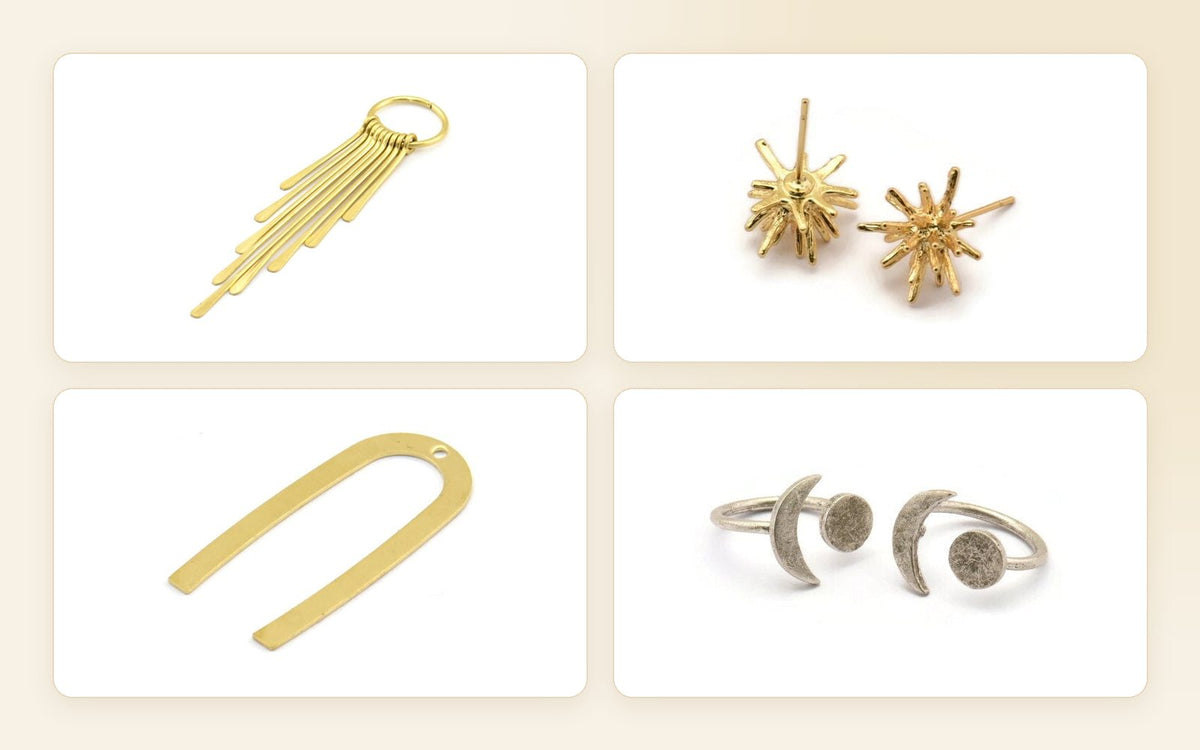
Gold is a precious metal, measured in karats, that does not tarnish and holds its value. Brass is an alloy of copper and zinc with a similar golden color. It is much lighter, much cheaper and slowly tarnishes. For jewelry making, brass is ideal for affordable, easy-to-work components, and gold-plated brass gives a bright gold look at a fraction of the price.
Brass vs gold at a glance
| Brass | Solid gold | |
|---|---|---|
| What it is | Alloy of copper (≈60–70%) and zinc | Element; alloyed with other metals below 24k |
| Color | Yellow gold, slightly muted; darkens with age | Rich yellow (or white/rose when alloyed); stays the same |
| Weight (density) | About 8.4–8.7 g/cm³ | About 19.3 g/cm³ (24k), so more than twice as heavy |
| Tarnish | Yes, can be polished | No |
| Hardness | Harder than pure gold; holds shape well | 24k is very soft; 14k–18k is harder |
| Price | Low | Very high, tracks the gold market |
| Hallmarks | None | Usually stamped 10k, 14k, 18k, 585, 750, etc. |


Understanding gold karats
Pure gold is 24 karat. Because it is too soft for most jewelry, it is mixed with other metals: 18k is 75% gold (stamped 750), 14k is 58.3% (585) and 10k is 41.7% (417). The rest is usually silver, copper and zinc, so in a sense all colored gold contains a little "brass" too.
Gold plated, gold filled and vermeil
- Gold plated: a thin layer of gold electroplated over a base metal such as brass. It gives the real gold color at low cost; the layer can wear with heavy use.
- Gold filled: a much thicker layer of gold bonded to brass, legally at least 1/20 of the total weight in the US. Far more durable than plating.
- Gold vermeil: gold plating over sterling silver instead of brass, with a thicker minimum layer.
Our gold plated charms and findings are plated brass, which gives you a matching bright gold color across clasps, jump rings, ear wires and charms.
6 ways to tell brass from gold
- Look for a hallmark. Solid gold is normally stamped with its karat (10k, 14k, 18k) or fineness (417, 585, 750). No stamp is a strong hint it is not solid gold. "GP", "GF" or "HGE" mean plated or filled.
- Feel the weight. Gold is more than twice as dense as brass, so a gold piece feels surprisingly heavy for its size.
- Check for tarnish. Dark spots, brown patina or green residue point to brass or copper. Gold does not tarnish.
- Rub it on skin. If it leaves a green or dark mark after wearing, it contains copper-rich metal like brass.
- Look at worn edges. On plated items, a different color showing through on edges or clasps means a brass base.
- Use a jeweler's acid test. A jeweler can test with acid or an XRF analyzer for a definitive answer.
Which should you choose for jewelry making?
Choose brass when you want a warm golden look, lots of components at a low price, or metal you can easily stamp, hammer, bend and drill. Raw brass is the favorite base for boho, vintage and minimalist designs. Browse raw brass findings and charms.
Choose gold plated brass when you want a brighter, more uniform gold color that lasts longer than raw brass, at a fraction of solid gold prices.
Choose solid gold or 925 silver for heirloom pieces and very sensitive skin. We carry 925 sterling silver findings too.
Frequently asked questions
Is brass better than gold?
Not in value or tarnish resistance, but brass is harder, cheaper and easier to work, which makes it better for many fashion jewelry and craft uses.
Does brass look like gold?
Freshly polished brass looks very similar to 14k–18k gold. Over time it becomes darker and warmer unless sealed or plated.
Will brass turn my skin green?
It can, especially on rings. The mark is harmless and washes off; a coat of clear sealant on the inside prevents it. Read more in Does Brass Tarnish?
Shop Gold Plated Charms & Findings
View all →


More jewelry making guides
All guides →
How to Stamp Metal Jewelry: A Beginner's Guide to Stamping Blanks
Metal stamping needs steel letter stamps, a 1–2 lb hammer, a steel bench block and soft-metal blanks like brass or copper. Strike...

Jump Ring Sizes Chart: Gauge, mm and How to Open and Use Jump Rings
Jump rings are sized by outer diameter in mm and wire thickness in gauge or mm. 4–6 mm rings in 0.7–0.8 mm...

Types of Earring Hooks and Ear Wires (and How to Make Your Own)
Fish hooks (French wires) are the most common earring hooks; leverbacks and kidney wires are the most secure; hoops, threaders and shepherd...