
Types of Earring Backs: A Complete Guide (With Pictures)
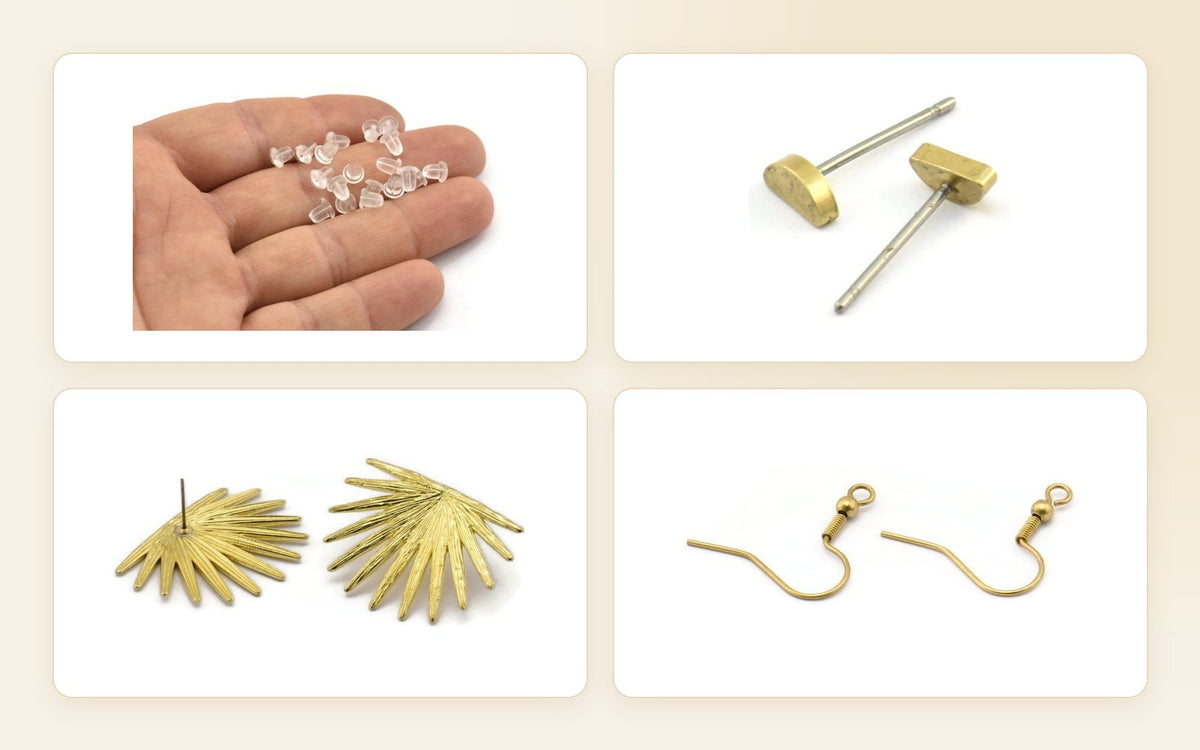
There are around ten common types of earring backs. Butterfly (push) backs are the standard for studs, rubber or silicone backs are the cheapest and gentlest, screw backs and locking backs are the most secure, and flat or disc backs are the most comfortable. Hoops and huggies use hinged or latch closures instead of a separate back.
How earring backs work
A stud earring has a straight post (usually about 0.7–0.8 mm thick, roughly 20–21 gauge) that passes through the piercing. The back slides onto the post behind the ear lobe and holds the earring in place by friction, a thread or a lock. Matching the back to the post matters: a back that is too loose lets earrings fall out, one that is too tight is hard to remove.


1. Butterfly backs (push backs, friction backs)
The classic metal back with two curled "wings" that grip the post. You push it on, and pull it off. Butterfly backs fit almost any standard post, are inexpensive and come in every metal finish. Over time the wings loosen; gently squeezing them together with your fingers tightens the grip again.
Best for: everyday studs, light earrings, matching findings sets.
2. Rubber and silicone backs
Small clear rubber or silicone stoppers that slide onto the post. They are soft, nearly invisible, hypoallergenic and very cheap, which makes them popular for craft fairs and for sending earrings to customers. They can wear out and are not as secure on heavier earrings.
Best for: lightweight studs, sensitive ears, backups for fish-hook ear wires so they cannot slide out.
3. Bullet clutch backs
A small cylinder (the "bullet") with a silicone or plastic sleeve, sometimes with a flat metal disc around it. The sleeve grips the post firmly and the disc spreads weight across the lobe.
Best for: slightly heavier studs, earrings that tend to tilt forward.
4. Disc backs (comfort backs, jumbo backs)
A wide flat disc, either metal or clear plastic, that supports the lobe. Larger discs are sold as earring lifters to keep heavy statement earrings from drooping.
Best for: big studs, heavy charms on posts, stretched or sensitive lobes.
5. Screw backs
The post is threaded and the back screws on. Screw backs are among the most secure options, which is why they are used on expensive diamond studs and children's earrings. They take a little longer to put on and require a matching threaded post.
Best for: valuable earrings, children, active wear.
6. Locking backs
Push-on backs with a spring or clamp mechanism that locks into a groove on the post and releases only when you squeeze it. Very secure, but they need posts with the matching groove.
7. Flat backs (threadless and threaded)
Common in body jewelry and cartilage piercings. The earring has a flat disc behind the ear and the decorative top is pushed in (threadless push-pin) or screwed in (internally threaded). Nothing pokes into your neck, so they are comfortable for sleeping and wearing headphones.
8. Hinged and latch backs (hoops and huggies)
Huggie and hoop earrings have a small hinged segment that clicks into a notch. There is no separate back to lose.
9. Leverback (lever-back) closures
A curved ear wire with a hinged lever that snaps closed behind the ear. Leverbacks are a great upgrade over open fish hooks for dangle earrings, because they cannot slip out. See Types of Earring Hooks for more.
10. Magnetic and clip-on backs
For unpierced ears, a magnet behind the lobe holds the front in place, or a clip-on mechanism pinches the lobe. Neither needs a piercing.
Which earring back should you choose?
| Need | Best back |
|---|---|
| Cheapest and simplest | Butterfly or rubber |
| Most secure | Screw back or locking back |
| Most comfortable / sleeping | Flat back or disc back |
| Heavy earrings | Bullet clutch with disc, or earring lifters |
| Sensitive ears | Silicone backs with sterling silver or stainless steel posts |
| Dangle earrings | Leverback ear wires, or rubber stoppers on fish hooks |
Making your own studs
To make stud earrings, glue a flat charm, cabochon or stamped blank onto an earring post with a flat pad using a two-part epoxy or jewelry glue, let it cure fully, and add a butterfly back. Step-by-step instructions are in How to Make Earrings.
Frequently asked questions
What are the most common earring backs?
Butterfly (push) backs, followed by rubber/silicone backs and bullet clutches.
Do earring backs fit all earrings?
Push-on backs fit most standard posts. Screw backs and locking backs only fit posts made for them.
How do I keep earring backs from falling off?
Squeeze the wings of butterfly backs slightly together, switch to a bullet clutch, or use screw or locking backs for important pieces.
Shop Earring Backs & Stoppers
View all →


More jewelry making guides
All guides →
How to Stamp Metal Jewelry: A Beginner's Guide to Stamping Blanks
Metal stamping needs steel letter stamps, a 1–2 lb hammer, a steel bench block and soft-metal blanks like brass or copper. Strike...

Jump Ring Sizes Chart: Gauge, mm and How to Open and Use Jump Rings
Jump rings are sized by outer diameter in mm and wire thickness in gauge or mm. 4–6 mm rings in 0.7–0.8 mm...

Types of Earring Hooks and Ear Wires (and How to Make Your Own)
Fish hooks (French wires) are the most common earring hooks; leverbacks and kidney wires are the most secure; hoops, threaders and shepherd...