
How to Make a Necklace: Pendant, Charm and Choker Necklaces (Plus Length Chart)
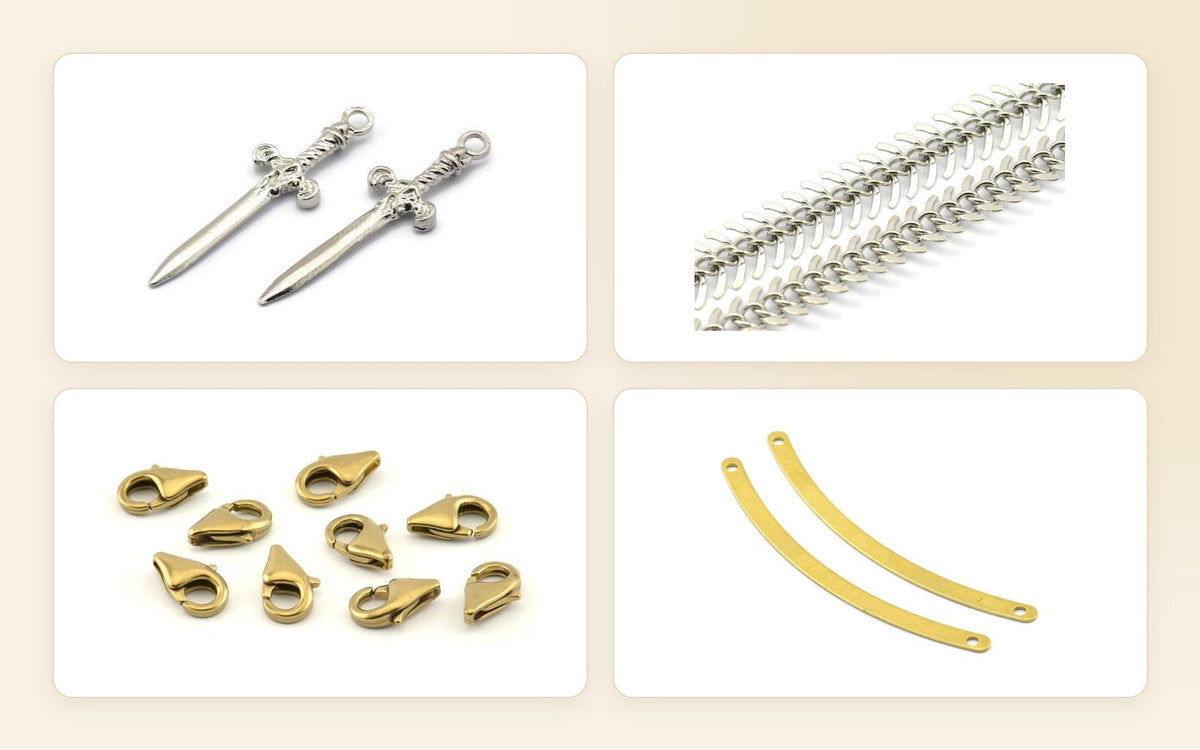
Cut a chain to length (18 in / 45 cm is the most popular), attach a lobster clasp with a jump ring at one end and a plain jump ring at the other, then hang a pendant in the center. For cord or ribbon necklaces, finish the ends with end caps or ribbon crimps instead.
What you need
- Chain-nose pliers (two pairs ideal) and flush cutters
- Chain, or cord, leather or ribbon
- A lobster clasp or other clasp
- Jump rings (4–6 mm)
- A pendant or a few charms


Necklace length chart
| Name | Length | Where it sits |
|---|---|---|
| Choker | 14–16 in (35–40 cm) | Around the base of the neck |
| Princess | 17–19 in (43–48 cm) | Just below the collarbone; the most popular |
| Matinee | 20–24 in (50–60 cm) | Above the bust |
| Opera | 28–36 in (70–90 cm) | At or below the bust |
| Rope | 36 in+ (90 cm+) | Long; can be doubled |
Method 1: Pendant necklace on chain
- Measure and cut the chain to length with flush cutters, cutting through a single link.
- Open a jump ring, thread on the lobster clasp and the last link of one chain end, then close it.
- Add a slightly larger jump ring to the other end; this is what the clasp hooks into.
- Find the center of the chain, open a jump ring, add the pendant and close it around the center link. If the chain is too fine for a jump ring, slide the pendant on with a bail before adding the clasp.
Method 2: Multi-charm necklace
Attach three, five or seven charms with jump rings, spaced evenly from the center outward. Odd numbers look balanced. Mixing a few sizes of the same theme works well, for example moon and star charms, or initial charms for a name necklace.
Method 3: Cord, leather or ribbon necklace
- Cut the cord to length.
- Glue the end into an end cap or press a ribbon crimp end closed over a flat ribbon with chain-nose pliers.
- Attach a jump ring and clasp to the loops on the end caps.
- Slide a pendant onto the cord before closing the second end, or hang it from a jump ring.
Method 4: Choker necklace
A choker is simply a 14–16 inch necklace that sits at the base of the neck. Use velvet ribbon with ribbon crimps, a fine chain, or a ready-made metal choker base, then add a single charm in the center. Always include an extender chain so it can be adjusted for comfort.
Layered necklaces
For a layered look, make two or three necklaces about 2 inches (5 cm) apart in length, for example 16, 18 and 20 inches, and use pendants of different sizes.
Choosing a clasp
- Lobster clasp: secure and the most popular for necklaces and bracelets.
- Spring ring: small and inexpensive, best for light chains.
- Toggle: decorative and easy to fasten, used on chunky designs.
- Magnetic: easiest to open, ideal for people with limited dexterity; browse our end caps and magnetic clasps.
Frequently asked questions
What is the standard length for a women's necklace?
18 inches (45 cm), the princess length.
How do I attach a pendant to a chain?
Use a jump ring or bail large enough for the chain to pass through, or hang it on a jump ring around a single center link.
What size jump ring should I use for a necklace?
4–6 mm for attaching clasps and most pendants; see the jump ring size guide.
Shop Charm Pendants & Brass Pendants
View all →


More jewelry making guides
All guides →
How to Stamp Metal Jewelry: A Beginner's Guide to Stamping Blanks
Metal stamping needs steel letter stamps, a 1–2 lb hammer, a steel bench block and soft-metal blanks like brass or copper. Strike...

Jump Ring Sizes Chart: Gauge, mm and How to Open and Use Jump Rings
Jump rings are sized by outer diameter in mm and wire thickness in gauge or mm. 4–6 mm rings in 0.7–0.8 mm...

Types of Earring Hooks and Ear Wires (and How to Make Your Own)
Fish hooks (French wires) are the most common earring hooks; leverbacks and kidney wires are the most secure; hoops, threaders and shepherd...